
Vaishali
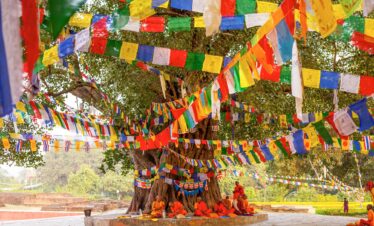
Vaishali, located in the Indian state of Bihar, is an ancient city with deep historical and religious significance. It is renowned as the birthplace of Lord Mahavira, the 24th and last Tirthankara of Jainism, and as the site of several important events in the life of Lord Buddha.
One of the most significant landmarks in Vaishali is the Ashoka Pillar, also known as the Lion Pillar of Vaishali, erected by the Mauryan emperor Ashoka in the 3rd century BCE to commemorate the spot where Lord Buddha preached his last sermon. The pillar is adorned with a sculpted lion capital, which is now the national emblem of India.
Vaishali is also associated with several events from the life of Lord Buddha. The Kutagarasala Vihara, a monastery built by King Ajatashatru for Lord Buddha’s residence, and the Ananda Stupa, built in memory of Lord Buddha’s most devoted disciple, are important pilgrimage sites for Buddhists.
Another significant site in Vaishali is the Relic Stupa, which is believed to house the sacred relics of Lord Buddha. The stupa is revered by Buddhists and attracts pilgrims from around the world seeking blessings and spiritual solace.
In addition to its religious significance, Vaishali is known for its rich cultural heritage and archaeological remains. The Vaishali Archaeological Museum houses a valuable collection of artifacts, sculptures, and relics excavated from the region, including pottery, coins, and statues dating back to ancient times.
Vaishali is also mentioned in ancient Indian epics and texts, including the Mahabharata and the Ramayana, adding to its historical importance. The city is believed to have been one of the earliest republics in the world and played a significant role in the political and cultural landscape of ancient India.
Overall, Vaishali is a place of profound historical and religious significance, offering visitors a chance to explore ancient ruins, archaeological sites, and sacred landmarks associated with Buddhism and Jainism. It is a destination that resonates with spirituality, culture, and heritage, inviting pilgrims and travelers alike to experience its timeless charm and legacy.
City Tour




Cultural Tours
Tourism is travel for pleasure or business; also the theory and practice of touring, the business of attracting, accommodating, and entertaining tourists, and the business of operating tours. Tourism may be international, or within the traveller’s country. The World Tourism Organization defines tourism more generally, in terms which go “beyond the common perception of tourism as being limited to holiday activity only”, as people “traveling to and staying in places outside their usual environment for not more than one consecutive year for leisure, business and other purposes”.
Tourism can be domestic or international, and international tourism has both incoming and outgoing implications on a country’s balance of payments. Today, tourism is a major source of income for many countries, and affects the economy of both the source and host countries, in some cases being of vital importance.
Jungle Safari
A is an overland journey, usually a trip by tourists to Africa. In the past, the trip was often a big-game hunt, but today, safari often refers to trips to observe and photograph wildlife—or hiking and sightseeing, as well.
The Swahili word safari means journey, originally from the Arabic meaning a journey; the verb for “to travel” in Swahili is kusafiri. These words are used for any type of journey, e.g. by bus from Nairobi to Mombasa or by ferry from Dar es Salaam to Unguja. Safari entered the English language at the end of the 1850s thanks to Richard Francis Burton, the famous explorer.
The Regimental March of the King’s African Rifles was ‘Funga Safari’, literally ‘tie up the March’, or, in other words, pack up equipment ready to march.
In 1836 William Cornwallis Harris led an expedition purely to observe and record wildlife and landscapes by the expedition’s members. Harris established the safari style of journey, starting with a not too strenuous rising at first light, an energetic day walking, an afternoon rest then concluding with a formal dinner and telling stories in the evening over drinks and tobacco.
Multi Day Tour